
Reblend
REBLEND was a UK government funded ‘Faraday Battery Challenge’ innovation project to develop core processes and capabilities for a UK-based automotive battery recycling solution that recovers critical materials from end-of-life batteries.

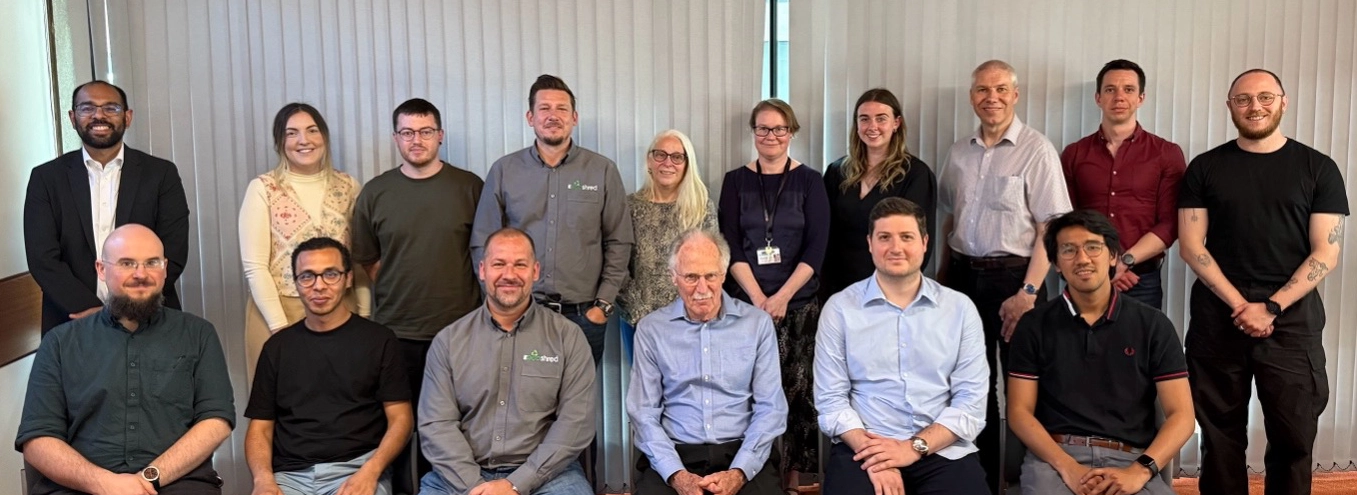
This £2.3 million (€2.6 million) initiative brought together a consortium of eight UK partners led by Ecoshred Limited. Having written the successful proposal, Iconiq Innovation also served in the role of project management support, providing essential administrative and coordination services throughout the two-year programme.
The project delivered breakthrough recycling technologies that achieved >94% pure cathodic black mass and demonstrated battery-grade material recovery at a highly competitive low cost of £6/kg (€6.80/kg). Ultimately, the project established the foundation for a sustainable UK battery supply chain.
funding details
Programme
Faraday Battery Challenge Round 5 (Innovation CRD)
Total project value
£2,337,589
Grant value
£1,816,418
Project duration
1 March 2023 – 30th April 2025 (27 months)
Consortium partners



Key outcomes & impact
The REBLEND project successfully demonstrated three world-first processes for the recovery of valuable cathode active materials (CAMs) including cobalt, nickel, and lithium. The project achieved >94% cathodic black mass purity, exceeding the industry benchmark of 89% mixed black mass. Battery-grade lithium carbonate was extracted at very high purity, validating recovery processes for high-purity materials. Techno-economic analysis demonstrated that short-loop recycling was more profitable than conventional long-loop methods, with approximately 30% lower environmental impact than state-of-the-art hydrometallurgy processes.
The consortium generated significant intellectual property, filing two patents for emulsion separation of black mass and advanced membrane technology. Five peer-reviewed publications and white papers disseminated findings internationally.
Employment impacts included 11 new hires across consortium partners, with Ecoshred obtaining ATF licensing for processing up to high-volumes of material annually and securing a production facility in Widnes for commercial-scale operations. During the project, partner: Watercycle Technologies closed a £5.6 million Series A investment round, taking them to the next level of mineral recovery from wastewater.

94%
Cathodic black mass
purity achieved
Approx 30%
lower environmental impact than state-of-the-art hydrometallurgy processes
2 Patents
filed
and 5 peer reviewed publications and white
papers created
The Challenge
The UK automotive battery sector faced critical supply chain vulnerabilities, sourcing all cathode active materials from overseas markets. With cobalt and lithium classified as critical minerals, and nickel on the UK watchlist, supply chain disruption posed significant risks to the emerging electric vehicle industry. The International Energy Agency predicted that global lithium and cobalt demand would outstrip committed production from the mid-2020s, with lithium facing a potential shortfall of 107kt/year by 2030.
Existing commercial battery recycling relied on energy-intensive shredding to produce mixed black mass, followed by costly hydrometallurgical processing. This approach recovered impure mixed materials requiring extensive further processing, focused only on the most valuable fractions, and lacked commercial-scale direct recycling for lithium or electrode reclamation. Production of fine carcinogenic dust during shredding created major health and safety concerns, requiring costly personal protective equipment and clean-up procedures. The UK lacked commercial-scale battery recycling plants capable of producing battery-grade materials for direct reuse in new cells.
Iconiq's role
Iconiq Innovation’s role centred on comprehensive project management support as a subcontractor to Ecoshred. This included proposal development, budget management, monthly consortium coordination meetings, quarterly reporting to Innovate UK Monitoring Officers, milestone tracking, and administrative support for grant claims and change requests. Iconiq’s expertise ensured robust project governance, timely deliverable submission, and effective stakeholder communication throughout the programme’s delivery. At project end, excellent feedback was given by the project Monitoring Officer as well as from the funding body representative from Faraday.
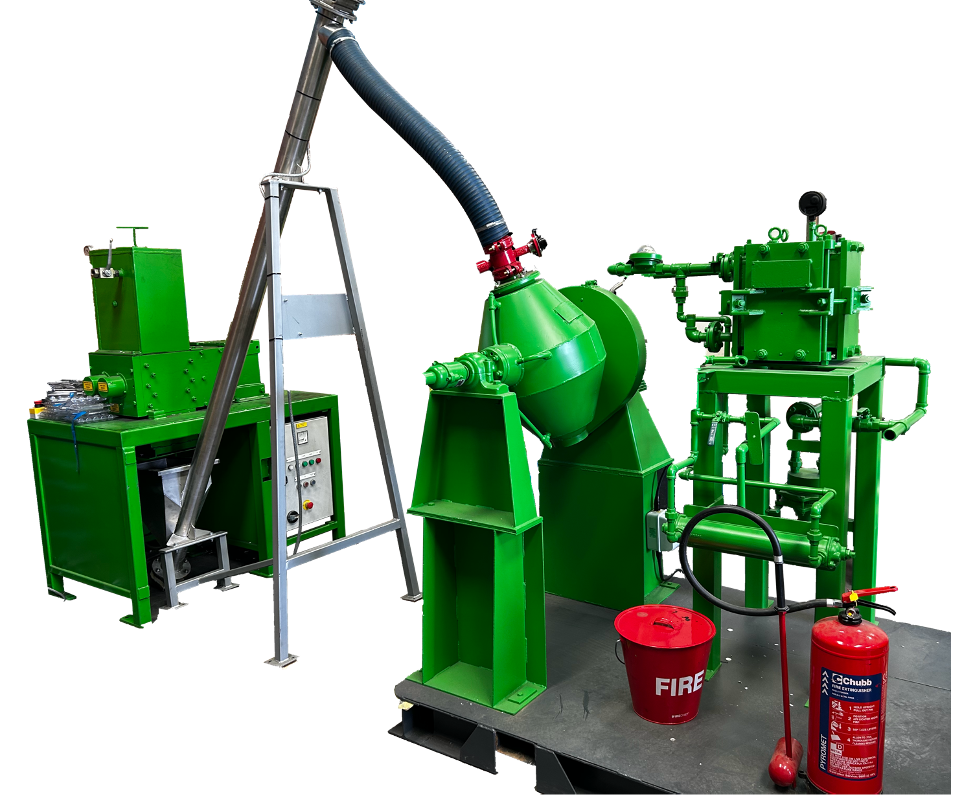
The REBLEND consortium combined innovative separation technologies to create a safer, more efficient recycling process. Ecoshred developed optimised shredding parameters using bespoke cross-cut blades achieving small particle dimensions, with vacuum sealing systems and battery conditioning techniques to reduce exothermic reactions and fire risks. The University of Birmingham scaled electrostatic and magnetic separation from gram-scale to kilogram-scale processes, producing separate streams of high-purity cathode and anode materials whilst minimising dust formation. The University of Leicester pioneered ultrasonic delamination technology and developed a breakthrough oil-in-water nano-emulsion method for black mass purification, reducing processing time from hours to seconds whilst achieving very high purity.
Watercycle Technologies applied advanced polymeric nanocomposite membrane technology to achieve zero liquid discharge and extract lithium at 99%+ purity from complex waste streams. ICoNiChem developed optimised metal recovery processes, demonstrating high nickel and cobalt recovery, with new techniques reducing processing costs by 60%. The consortium processed multiple battery chemistries including NMC, LMO, LFP, and LCO at pilot scale.
Lessons learned
What worked well:
The collaborative consortium approach proved highly effective, with partners providing mutual support beyond their defined roles to ensure project success. Extensive optimisation trials successfully identified optimal configurations for discharge conditions, shredding blade dimensions, and vacuum sealing parameters. Strong engagement with regulatory bodies, including the Environment Agency, facilitated development of new certification pathways for battery recycling operations.
What would be approached differently:
Alternative shredding methodologies including wet and gas processes were explored but proved cost-prohibitive for the project scope. Future work would benefit from earlier integration of pretreatment stages for waste streams with high total organic carbon content, which impacted lithium carbonate quality from battery recycling wastewater.

Working with Iconiq has been a fantastic experience from start to finish. Charlie’s expertise and professionalism was second to none, particularly when navigating the complexities of our large and varied consortium. We simply couldn’t have completed this project without his invaluable guidance.
Thanks to Iconiq’s support, we gained the confidence and capability to finalise our grant application and take our business forward to commercialisation. Their contribution has been instrumental to our success, and we wouldn’t hesitate to work with them again on future projects.
Anthony Hulmes, Ecoshred
Further information
Get in touch with Charles Culling
Iconiq Innovation
Charlie.Culling@iconiqinnovation.com